Beginner Home Improvement Checklist for New Homeowners
Use this beginner home improvement checklist to organize, maintain, and upgrade your new home. Discover essential projects, safety checks, and maintenance tasks for new homeowners.




Discover easy DIY projects for first-time homeowners. Try these affordable beginner-friendly home improvements to upgrade your space without hiring a professional.
Buying your first home is exciting, but it can also feel overwhelming. Suddenly, every room seems to have something you want to improve, organize, repair, or personalize.
The good news? You don't need to be a professional contractor to make meaningful improvements.
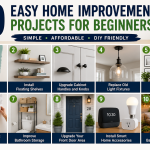
There are plenty of easy DIY projects for first-time homeowners that require basic tools, a small budget, and a little patience. From painting walls to installing shelves, simple projects can make your home feel more comfortable while potentially saving money.
Here are some beginner-friendly DIY projects you can start with.
Table of contents [Show]
Painting is one of the easiest ways to completely change the look of a room.
Instead of repainting an entire room, start with one accent wall. Choose a color that complements your furniture and existing decor.
Before painting, clean the wall and cover nearby surfaces. Apply painter's tape around trim and edges for cleaner lines.
DIY Difficulty: Easy
Estimated Time: 3–5 hours
One of the fastest kitchen upgrades is replacing cabinet handles and knobs.
Old hardware can make cabinets look outdated, even if the cabinets themselves are still in good condition.
You can choose from styles such as:
Before purchasing new hardware, measure the distance between existing screw holes.
DIY Difficulty: Very Easy
Estimated Time: 1–2 hours
Floating shelves are both practical and decorative.
They can add extra storage space in:
Use them to display books, plants, framed photos, or small decorative items.
Make sure to locate wall studs or use appropriate wall anchors before installing heavy shelves.
DIY Difficulty: Beginner
Estimated Time: 2–3 hours
Replacing an outdated light fixture can instantly modernize a room.
Popular options include:
Always turn off power at the circuit breaker before working on electrical fixtures. If you're unsure about electrical wiring, hire a qualified professional.
DIY Difficulty: Moderate
Estimated Time: 1–2 hours
The entryway is one of the first areas people see when entering your home.
A simple DIY organizer can help keep everyday items organized.
Consider adding:
This project can make your home feel more organized without requiring major renovations.
DIY Difficulty: Easy
Estimated Time: 2–4 hours
Want to refresh your kitchen without a major renovation?
Peel-and-stick backsplash tiles are a beginner-friendly option.
They come in many styles, including:
Before installation, thoroughly clean and dry the wall surface.
Carefully measure the area before cutting tiles.
DIY Difficulty: Easy
Estimated Time: 3–6 hours
Small bathroom improvements can make a surprisingly big difference.
Try replacing:
Choose matching finishes to create a more cohesive design.
For example, if you choose matte black cabinet hardware, consider matching towel bars and hooks.
DIY Difficulty: Very Easy
Estimated Time: 1–3 hours
If your new home has outdoor space, building a small garden bed can be a rewarding DIY project.
Raised garden beds are great for growing:
Begin with a small area rather than creating a large garden immediately.
Simple wooden raised beds are beginner-friendly and can improve your backyard's appearance.
DIY Difficulty: Beginner
Estimated Time: One weekend
This DIY project can help improve your home's energy efficiency.
Small gaps around doors and windows may allow outside air to enter your home.
Weatherstripping can help seal these gaps.
This is one of the most practical DIY projects for first-time homeowners because it can improve comfort while reducing unnecessary energy loss.
DIY Difficulty: Easy
Estimated Time: 1–3 hours
Smart home technology has become increasingly popular among homeowners.
Beginner-friendly options include:
Start with one or two devices instead of trying to automate your entire home at once.
Smart lighting is often one of the easiest entry points because installation usually requires minimal technical knowledge.
DIY Difficulty: Easy to Moderate
Interior doors can become scratched or look outdated over time.
Instead of replacing them, consider giving them a fresh coat of paint.
Popular choices include:
You can also replace old door handles for an additional upgrade.
DIY Difficulty: Easy
Estimated Time: One day
Laundry rooms often become cluttered quickly.
Simple organization improvements can make the space more functional.
Try adding:
Even a small laundry room can become more efficient with better storage.
DIY Difficulty: Easy
Before starting DIY projects, consider building a basic toolkit.
Here are some essential tools:
You don't need to buy every tool immediately. Start with basic tools and expand your collection as you take on more projects.
DIY projects can be fun, but safety should always come first.
Keep these tips in mind:
Use gloves, safety glasses, and appropriate footwear when necessary.
Always read product instructions before using tools, paints, adhesives, or installation materials.
Don't begin your DIY journey with a major renovation.
Start with simple projects and gradually develop your skills.
Some jobs are better handled by licensed professionals.
These may include major electrical work, structural changes, gas systems, and complex plumbing repairs.
DIY projects can potentially reduce labor costs because you're completing some work yourself.
However, saving money should not be the only goal.
Poorly completed projects can sometimes create additional repair costs.
The best strategy is to focus on projects that match your current skill level.
Start with:
As your confidence grows, you can gradually take on more advanced projects.
Being a first-time homeowner doesn't mean you need to renovate everything immediately.
Start with small improvements that make your home more comfortable and functional.
Simple projects like painting an accent wall, replacing cabinet hardware, installing shelves, or improving storage can make a noticeable difference.
The key is to start small, learn basic skills, and gradually build confidence.
With the right tools and a little patience, DIY projects can help transform your house into a home that truly feels like your own.
Painting walls, replacing cabinet hardware, installing simple shelves, organizing closets, and adding weatherstripping are great beginner-friendly DIY projects.
Start with a hammer, screwdriver set, cordless drill, measuring tape, level, utility knife, pliers, and adjustable wrench.
Painting, improving storage, updating cabinet hardware, landscaping, improving energy efficiency, and modernizing fixtures can improve a home's appearance and functionality.
Beginners should be cautious with electrical and plumbing work. Complex repairs or installations are best handled by qualified professionals.
Use this beginner home improvement checklist to organize, maintain, and upgrade your new home. Discover essential projects, safety checks, and maintenance tasks for new homeowners.